

Negotiation 4. Strategy and Tactics of Integrative Negotiation
Chapter 4
Strategy and Tactics of Integrative Negotiation
Summary
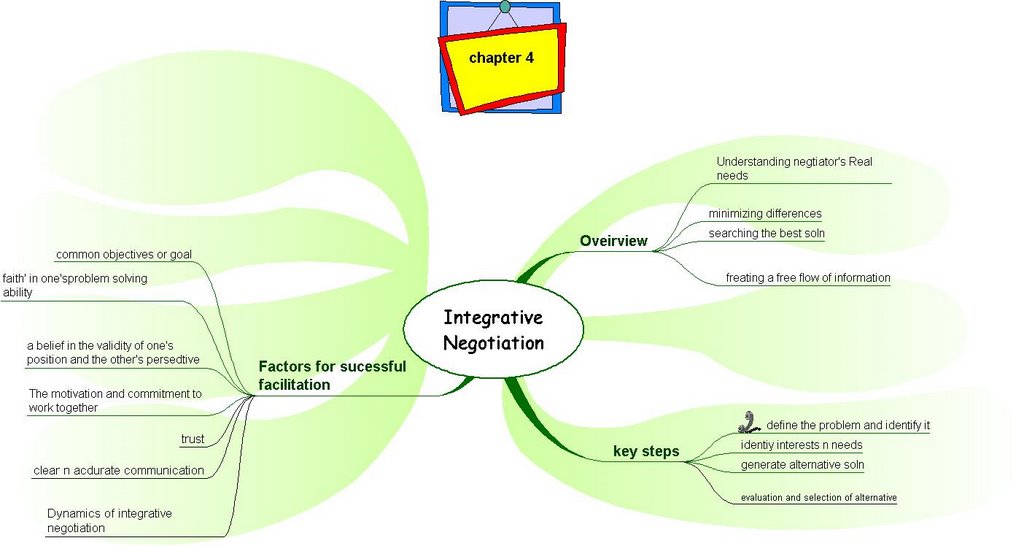
In this chapter we basically deal with integrative negotiation and it is different from other kind of negotiation. First the goal of the negotiation should be addressed properly otherwise we can never reach the solution. This type of negotiation needs to create a free flow of information and we have to clearly the negotiator’s real needs and objectives. The primary purpose of this type if negotiation is to build the foundation where there will be more similarities in between two and more parties focusing their goal and objectives. It is the process of defining these goals and engaging is a set of procedures that permit both sides to maximize their objectives.
The chapter begins with an overview of the integrative negotiation process a high level of concern for both sides achieving their own objectives proper a collaborative problem-solving approach. Negotiators frequently fail at integrative negotiation because they fail to perceive the integrative potential of the negotiation problem. However, breakdowns also occur due to distributive assumptions about negotiation problem, the mixed motive nature of the issues or the negotiators previous relationship with each other. A successful integrative negotiation requires several processes. First the party’s needs must understand each other/s true needs and objectives. Second, they must focus on their similarities, emphasizing their commonalities rather than their differences. Third, they must focus on their similarities, emphasizing their differences. Finally, they must engage in a search for solution that meets the goals of both sides. This is a very different set processed from those in distributive bargaining.
Identifying and defining the problem, identifying interests and needs, generating alternative solution, and evaluating and selecting alternatives are the four key steps in the integrative negotiation process. This chapter stressed that successful integrative negotiation can occur if the parties are predisposed to finding a mutually acceptable joint solution. Many other factors contribute to a predisposition toward problem solving and a willingness to work together to find the best solution. For effective negotiation there should be common objectives and goals. Three types of goals – common, shard and joint may facilitate the development of integrative agreements. There should be always faith in One’s problem solving ability and Parties who believe they can work together usually are able to do so. It also emphasize in a having a belief in the validity of One’s own position and the other’s perspective. The purpose of integrative negotiation is not to question or challenge the other’s viewpoint, but to incorporate it into the definition of the problem and to attempt to it as the parties search for mutually acceptable alternatives. For integrative negotiation to succeed the parties must be motivated to collaborate rather than to compete. Both parties who are in the negotiation always should have at least a minimum level of trust because without that we can never move ahead though having trust means being close to the solution. The most important precondition for the integrative negotiation is clear and accurate communication.
posted by INDO-NEPAL FRIENDS | 1:34 PM

0 Comments:
Post a Comment
<< Home